Certified Smappee, Zaptec, Ohme and Wallbox installer in Brussels, Walloon and Flemish Brabant
Load study, installation, commissioning and compliance inspection by an approved body. We also install other brands.
Charging an electric car from an ordinary household socket is not meant to last. A full charge keeps the circuit under full load for hours, and house wiring was never designed for that. A charging station, or at least a reinforced socket, exists precisely for this.
Trained and approved by the manufacturers
A manufacturer certification means the station is configured, commissioned and registered exactly as the manufacturer requires, warranty included.
Smappee
Belgian manufacturer, known for its smart charge management and its integration with solar panels and home consumption monitoring.
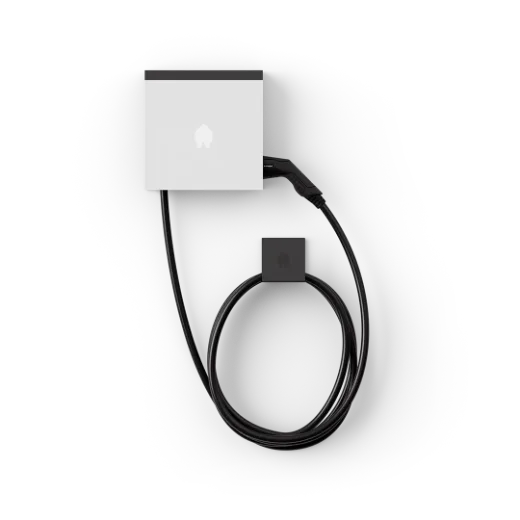
Zaptec
Norwegian manufacturer, appreciated for its compact size, its durability outdoors and its charge management in apartment buildings, where several stations share one supply.
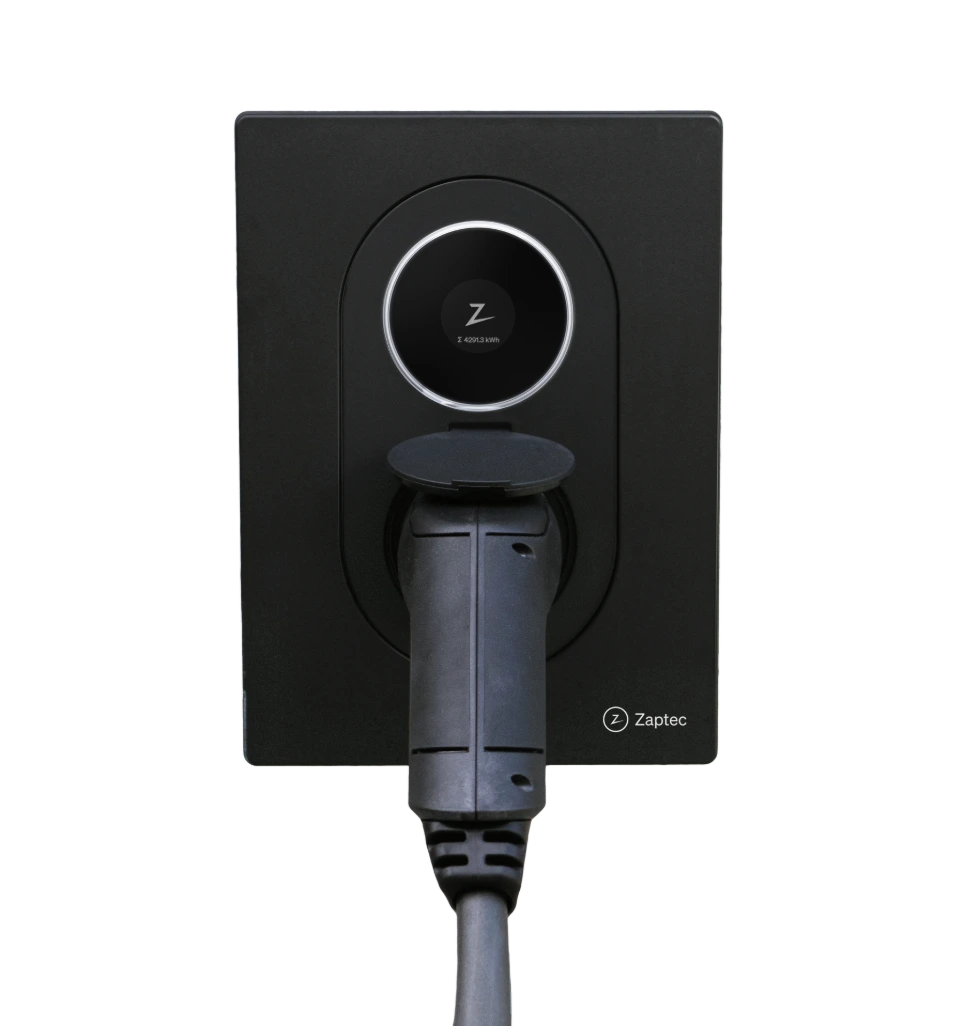
Ohme
Innovative manufacturer, specialised in optimising charging around dynamic electricity prices and off-peak hours to cut your bill as much as possible.

Wallbox
A benchmark brand (in particular the Pulsar Plus range), popular for its very compact format, its intuitive app and its value for money.

Already chosen another brand (Alfen, Hager, a reinforced socket, and so on)? We install those too.
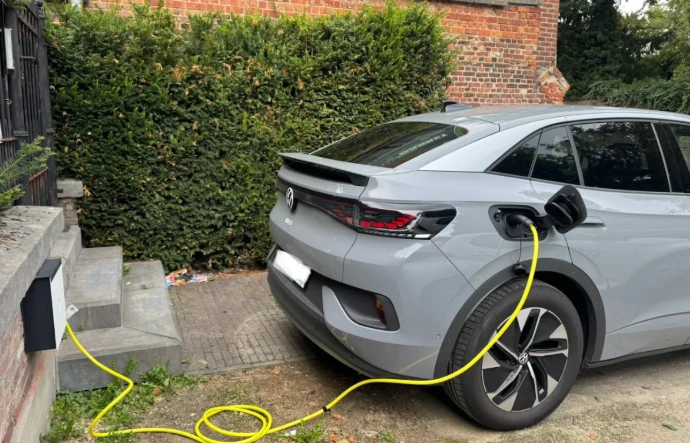
“Excellent work from Tapelec. The installation was fairly complex because of the distance to the vehicle and the difficult access to the electrical panel, but they solved everything without any trouble. They were very fast, clean and professional. I recommend them 100%”
From the load study to commissioning
A charging station is not simply screwed to the wall. Here is what we take care of.
The load study
We check what your connection and your panel can really handle, and whether an upgrade is needed.
The dedicated circuit and its protection
A clean line straight from the panel, correctly sized, with a residual current device suited to car charging.
Choosing the equipment
We show you the options that fit your situation, and you decide with the full picture.
The installation
Mounting, cabling and connection, at home as well as at a workplace.
Charge management
If your available power is limited, a load balancing system stops the meter tripping when the oven and the charging station are running at the same time.
Commissioning and inspection
We test the installation and arrange the visit of the approved inspection body ourselves.
EV charging in apartment buildings in Brussels
You are a building manager (syndic), a member of a building council, or simply a resident who wants to charge a car in the car park. Here is the situation in plain language, without jargon.
The essentials in three points
- Since 1 January 2025, many car parks in Brussels buildings have to provide charging points. It is no longer a comfort, it is an obligation.
- In a building you cannot connect a station the way you would in a house. You need a meter reserved for the charging points and a system that shares out the current, otherwise the whole building risks tripping.
- The decision is taken at the general assembly. We provide a quote broken down item by item, which the syndic can present to the owners exactly as it is.
1. Is your building concerned?
The Brussels rule targets covered or underground car parks with 10 spaces or more that hold an environmental permit. The environmental permit is the authorisation the Region issues to operate a car park of that size. If your building has one, the obligation applies, and it is the permit holder who answers for it, so the owners association represented by its syndic.
The number of charging points required depends on how the building is used. A charging point is one charging socket for one car. Two cars charging at the same time means two charging points.
| Type of car park | Since 2025 | In 2030 | In 2035 |
|---|---|---|---|
| Residential building | 1 charging point for every resident who has a parking space and owns an electric car | ||
| Offices (existing building) | 10% of the spaces, at least 2 points | 20 % | 30 % |
| Public car park or other use | 5% of the spaces, at least 2 points | 10 % | 20 % |
So for a residential building there is no percentage to reach. As soon as a resident reports that they own an electric car, a charging point has to be installed at their space within a reasonable time. The percentages are calculated on the number of spaces authorised by the permit, not on the number of cars parked there today. We check your case with you, permit in hand.
2. Why a building car park is not treated like a private garage
As soon as the car park has more than 3 spaces, Sibelga, the electricity network operator in Brussels, requires a collective approach. The stations have to be connected to a meter reserved for them, or to the building's common meter. That meter has to be a communicating meter, also called a smart meter. The syndic can ask for it to be installed free of charge.
The reason is simple. A building's supply was sized for the lighting, the lift and the flats, not for charging cars. If every resident fits a station on their own flat meter, three cars charging at the same moment can exceed the available power and cut the supply to the whole building.
Two concrete consequences. First, the power of a charging point in a building is capped at 11 kW, and the real maximum depends on the voltage of your connection. Second, load balancing becomes mandatory as soon as the total power of the stations exceeds the power set in the building's contract. Load balancing is a system that watches consumption in real time and shares the available current between the connected cars. In practice four cars each charge a little more slowly, but nothing trips.
That leaves the question that always comes up at the assembly: who pays for the electricity? Because the stations are fed from a common meter, splitting the consumption has to be handed to a third party, either a charging operator or the owners association itself with a sub-metering system. Each user is then billed for what they actually used, and not in proportion to their share of the building.
3. Safety rules in a covered car park
- a plan showing the charging spaces, displayed at the entrance and the exit of the car park
- an emergency stop button that switches off all the stations at once
- physical protection of the stations, so that a car cannot hit them
- an automatic power cut if a fire is detected
- an installation sized and then maintained according to the RGIE, the Belgian regulation for electrical installations
- fast charging above 50 kW is forbidden in a covered car park, unless the environmental permit allows it with a favourable opinion from the fire service
4. What we take care of
- the visit to the car park, the survey of the panel and the calculation of the power actually available
- the choice between individual stations and a collective infrastructure with sub-metering
- a quote broken down item by item, written to be read out at the general assembly
- the works request to Sibelga, prepared together with your syndic
- installation and connection in line with the RGIE
- the visit of the approved body, the independent organisation that inspects and certifies the installation, which we book ourselves
- the mandatory declaration of the installation to Sibelga, required for any charging station
5. A project we have already delivered
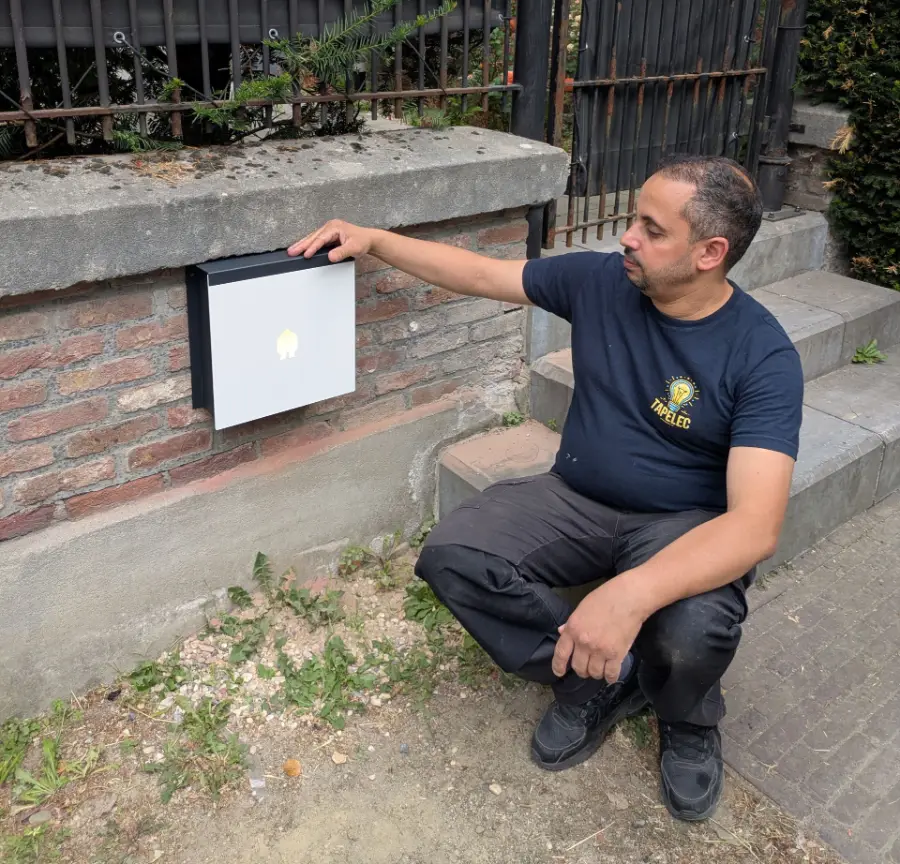
In Sint-Pieters-Leeuw, a Smappee station fixed to the wall of a building car park, supply cable and RJ45 network cable pulled over 50 metres, full installation and connection in line with the RGIE, for 3,970 EUR including VAT. We are certified Smappee, Zaptec, Ohme and Wallbox installers.
A word about the price. Until we have seen the car park, what we give you is an estimate, not a firm price. The distance between the panel and the space, the condition of the panel and the cable routes available change the amount completely. The price becomes firm after the visit, and then it does not move.
Sources (in French): Brussels Environment, covered and underground car parks and Sibelga, installing charging stations in an apartment building.
What customers ask us before they start
It depends on four things, in this order:
- Your mileage. Few trips and a car that sleeps at home? A slow solution is more than enough.
- Your installation. A single-phase meter limits the power that is possible. Three-phase opens up higher speeds.
- Your solar panels. If you have them, a station that can charge on your surplus really does change the bill.
- Your electricity contract. With a variable tariff, a station that charges during off-peak hours pays for itself.
That is exactly what we look at during the visit.
It is a genuine option and we suggest it whenever it is enough. It costs a lot less and it charges safely on a circuit reserved for it.
A reinforced socket is suitable if: you drive little, the car stays plugged in all night, your available power is limited, or you want to try before investing more.
A charging station becomes necessary if: you drive every day, you have two vehicles, you need to charge quickly between two trips, you want to control the charge from an app, or you are equipping a workplace.
The difference in speed matters: a reinforced socket can need a whole night where a station does the job in a few hours.
Almost always a little, sometimes a lot. The most common cases:
- A dedicated circuit. Mandatory. The station must have its own line from the panel, with nothing else on it.
- Suitable protection. Charging produces direct currents that a standard residual current device does not always detect. A specific protection is needed.
- Space in the panel. A full panel has to be extended or replaced.
- Sometimes a power upgrade from your network operator, if your current connection is not enough.
If the upgrade looks expensive, dynamic load management is often a cheaper alternative: the station lowers its own power when the rest of the house is consuming.
If you have them to hand, they save us time:
- The model of your car, and the charging power it accepts.
- Your approximate weekly mileage.
- Single-phase or three-phase, and the amperage shown on your meter.
- The distance between your electrical panel and the spot for the station.
- Indoors, in a garage, or outdoors exposed to the weather.
- Whether you have solar panels and a battery.
- Your type of electricity contract, fixed or variable.
And if you have none of this information, it does not matter. We survey it ourselves on site.
Yes, provided you choose a station that can do it and fit the metering it needs.
The principle: instead of exporting your surplus to the grid, the station detects it and sends it to the car. It follows your production and adjusts its power, and it can pause when a cloud passes if you want it to.
This is often what pays the installation back fastest. We will point you to a model that handles this function.
No, a station is not condemned to be white. Most models come at least in white and black, and some ranges offer more shades or interchangeable front covers.
This is not a pointless detail: a station is often fitted on the front of the house, clearly visible from the street. It may as well match your building.
The colours actually available vary by model and by moment. Tell us what you are looking for and we will check what is possible.
The installation itself usually takes one day, when the panel is close to the spot and no heavy modification is needed.
Allow more if the cable has to cross the house, if the panel has to be extended, or if a power upgrade from the network operator is needed. In that last case it is the administrative lead time that decides, not us.
On top of that comes the appointment with the inspection body, which we arrange as soon as the work is finished.
Yes. Adding a charging station is a significant change to your electrical installation, and it has to be inspected by an approved body.
As with our other projects, we include this inspection in our quote and we book the appointment ourselves. You have nothing to arrange.
The quota of charging points applies to covered or underground car parks with 10 spaces or more that are subject to an environmental permit. Below that threshold you have no quota to reach.
Two obligations remain all the same. As soon as the building has more than 3 parking spaces, Sibelga requires the installation to be designed collectively, with a meter dedicated to the charging points. And every station, even a single one, has to be declared to Sibelga.
For the collective infrastructure, yes: the work touches the common parts and the building's supply. That is why we provide a quote broken down by item, ready to be presented at the general assembly exactly as it is.
A resident can ask for a charging point at their space, but the connection goes through the building's infrastructure. Fitting a station on your own flat meter is exactly what Sibelga is trying to avoid, because the building's supply was not sized for charging cars.
When several residents charge behind the same meter, splitting the costs has to be managed by a third party. That third party can be the charging operator or the owners association itself.
In practice each charging point has its own metering: the system records who charged and how much, and everyone pays exactly what they used, with nothing split in proportion to their share of the building. The owners association has two options: hand the management and the billing to a charging operator, or keep it in-house and re-invoice through the syndic. This choice is made before installation, because it affects the equipment that gets fitted.
When in doubt, we come and look
You do not have to decide on your own between a reinforced socket and a charging station, or between several models. We come out, we look at your panel, your meter and the location, and we give you a clear quote, inspection included.
Next step
Request your charging station quote
Tell us about your car, your meter and where the station should go. We come and look, then send a written quote with the compliance inspection included. We speak English on the phone, on WhatsApp and by e-mail.
Contact Us
The easiest way to send us photos of your installation.
Brussels, Walloon and Flemish Brabant
We work on site only, at your home or on your building site. We have no office open to the public: reach us by phone, WhatsApp or through the form.
Français, English, Español
We reply in your language.
BCE BE 1015.146.075